Formula 1
Why McLaren feels the best drivers can still make a difference under F1 2026 rules
Amid much criticism from the drivers about the heavy-handed intervention of software in their control of the car, last year’s constructors’ championship-winning team says talent still counts
Stuart Codling Filip Cleeren
Published: Aug 12, 2026, 1:14 PM
Copy link
Share on Viber
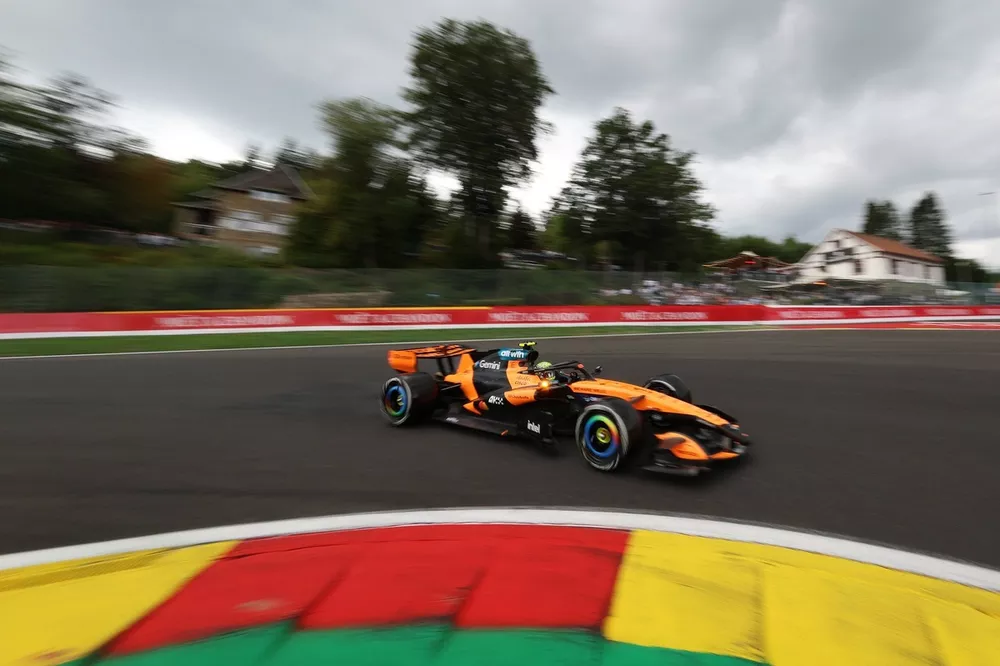
Lando Norris, McLaren
Photo by: Steven Tee / LAT Images via Getty Images
The complaints have been rumbling since before the start of the Formula 1 season. Periodically they intensify, especially at so-called ‘energy-starved’ circuits where the ratio of corners to straights, and the type of corners, mitigate against the new-generation cars being able to recharge their batteries through the lap.
A tweak to the regulations implemented ahead of the Miami Grand Prix reduced some of the much-criticised ‘yo-yo racing’ caused by drivers being in different states of charge. But more recently speed differences caused by the power units’ self-learning algorithms reacting to small variations in track conditions and driving technique have caused a great deal of angst.
In Spa, Oscar Piastri described it as a "pretty crap way of going racing".
But the situation isn’t going to change in the immediate future, even though there are those who argue in favour of the machine-learning tools being banned entirely – usually citing a phrase from F1’s sporting regulations as a mic drop. Section B1.9.1 states: "The driver must drive the car alone and unaided".
And there is still an argument to state that the best drivers will manage these new challenges, abstruse and bothersome though they may be. That was the perspective of McLaren’s technical director for engineering Neil Houldey in a round-table interview conducted during F1’s summer break.
"Actually the drivers who understand what they need to do, the ones who are switched on, the ones who are the best F1 drivers in the world are the ones who are still going to be the fastest," he said when asked by Motorsport if it’s currently possible to assess driver performance accurately.
"It may have changed in terms of… It's not all about top speed, it's about the thought processes going on in the background that generate that lap time.
"[Spa] is a good example where actually Oscar did get a slightly different deployment schedule, which meant he lost a couple of tenths, but was up with Lando.
"But I think those things balance out. You still see the difference between the good drivers and the less good drivers in the overall lap time and then in the race as well.
"My answer really would be that it all evens out in the end. That there might be a race or a qualifying session here or there where that disadvantages one driver or the other, but I still think you see the best drivers come out in the best place at the end of the season."
Defending champion Lando Norris took his first GP win of the year in Hungary
Photo by: Andy Hone/ LAT Images via Getty Images
Fundamentally the limitation of the current ruleset, with its near-50:50 split of electrical deployment to internal combustion power, is the amount of energy the car can store. Since the battery has to be recharged throughout the lap, software intervention is required for safety as well as performance reasons, to taper the electrical deployment rather than have it run out suddenly.
The machine-learning software also has a performance function in that it forms part of the engineers’ attempts to establish the "optimal lap" – the combinations of harvesting and deployment which gives the fastest lap time. The effect of the Miami rule tweaks, which gave the FIA more leeway to reduce energy harvesting limits, was to trade off peak speeds against a more sustained (if slightly lower) top speed.
But all this requires the driver to be consistent with the control inputs such as throttle position. If they attack a corner too aggressively and scrub off more speed than their team-mate in the same place, for instance, re-accelerating costs electrical power so they are punished by having less available later in the lap.
Houldey views it as a different order of risk and reward than drivers are used to: aggression now carries fewer rewards than a more cerebral and disciplined approach.
"It's definitely more of a thinking game," he said.
"And there's definitely a lot more going on for the drivers than there was – even 2022-25 [the ground-effect era] there was a lot happening for the drivers to be doing. But now it's that extra bit, and you've got to get not only your cornering speeds right, but you've got to get the way you go about deploying your energy, your throttle position, whatever it might be, absolutely right as well.
"It's certainly more technically challenging for the engineering team to get the most out of these cars, and it's more technically challenging for the drivers to get the most out of these cars. And in the end, as always, the best combination of car, driver, engineering team ends up doing the best job."
Read Also:
Formula 1McLaren trying to understand Ferrari's 'inspirational' upgrade volume
Formula 1The standout tech innovations of F1 2026 so far
We want your opinion!
What would you like to see on Motorsport.com?
Take our 5 minute survey.
- The Motorsport.com Team
Read and post comments
Read also :
Share Or Save This Story
Copy link
Share on Viber
Previous article F1 2026 mid-season grades: Racing Bulls stuns midfield pack
Next article Graeme Lowdon leaves Cadillac, replaced by new team principal
Top Comments
There are no comments at the moment. Would you like to write one?
View More & Comment

More from
Stuart Codling
What the Valtteri Bottas contract renewal says about Cadillac's F1 future
Formula 1
Formula 1
Las Vegas GP
4 h
What the Valtteri Bottas contract renewal says about Cadillac's F1 future
Future imperfect: What's behind the abortive 2030 F1 rules announcement?
Formula 1
Formula 1
Las Vegas GP
10 h
Future imperfect: What's behind the abortive 2030 F1 rules announcement?

More from
Lando Norris
"We haven't taken any steps backwards" – McLaren boss explains 2026
Formula 1
Formula 1
Las Vegas GP
11 h
"We haven't taken any steps backwards" – McLaren boss explains 2026
Lando Norris: F1 needs better rain tyres as wet Las Vegas would be "scary"
Formula 1
Formula 1
Las Vegas GP
2 d
Lando Norris: F1 needs better rain tyres as wet Las Vegas would be "scary"

More from
McLaren
Top 10 F1 cars of the 1980s
Formula 1
Top 10 F1 cars of the 1980s
Oscar Piastri set for grid penalty at F1 Las Vegas GP
Formula 1
Formula 1
Las Vegas GP
1 d
Oscar Piastri set for grid penalty at F1 Las Vegas GP
What is left to fight for in F1 2026?
Formula 1
Formula 1
Las Vegas GP
2 d
What is left to fight for in F1 2026?
Latest news
What the Valtteri Bottas contract renewal says about Cadillac's F1 future
Formula 1
F1 Formula 1
Las Vegas GP
4 h
What the Valtteri Bottas contract renewal says about Cadillac's F1 future

Valtteri Bottas beats Colton Herta to 2027 Cadillac F1 seat
Formula 1
F1 Formula 1
Las Vegas GP
4 h
Valtteri Bottas beats Colton Herta to 2027 Cadillac F1 seat
23XI Racing makes crew chief change for Bubba Wallace and Corey Heim
NASCAR Cup
NAS NASCAR Cup 5 h
23XI Racing makes crew chief change for Bubba Wallace and Corey Heim
IndyCar 2026 season review: Arrow McLaren
IndyCar
Indy IndyCar 6 h
IndyCar 2026 season review: Arrow McLaren
Feature
Discover prime content
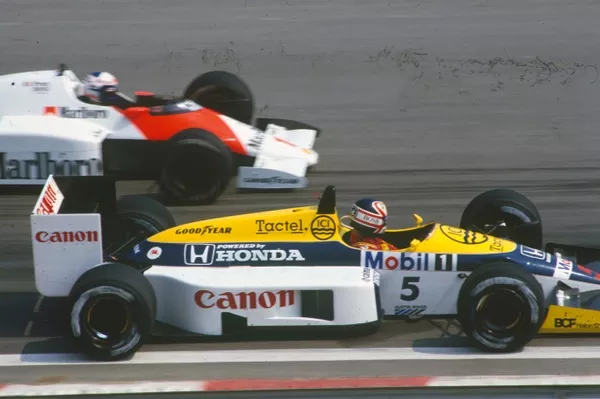
Top 10 F1 cars of the 1980s
Formula 1
By Kevin Turner
Top 10 F1 cars of the 1980s


Subscribe and access Motorsport.com with your ad-blocker.
From Formula 1 to MotoGP we report straight from the paddock because we love our sport, just like you. In order to keep delivering our expert journalism, our website uses advertising. Still, we want to give you the opportunity to enjoy an ad-free and tracker-free website and to continue using your adblocker.
You have 2 options:
- Become a subscriber.
- Disable your adblocker.
Subscribe now Already subscribed? Sign in here
Already disabled your adblocker?
Reload page
Manage Alerts
Subscribe