Formula 1
Everything Mercedes’ past F1 failures taught it ahead of 2026 reset
After eight consecutive Formula 1 constructors' championships, Mercedes entered the ground-effect era in 2022 "on the back foot" and is determined not to do so again as the rules change once more for 2026
Stuart Codling Jake Boxall-Legge
Edited: Nov 17, 2025, 4:39 PM
Copy link
Share on Viber
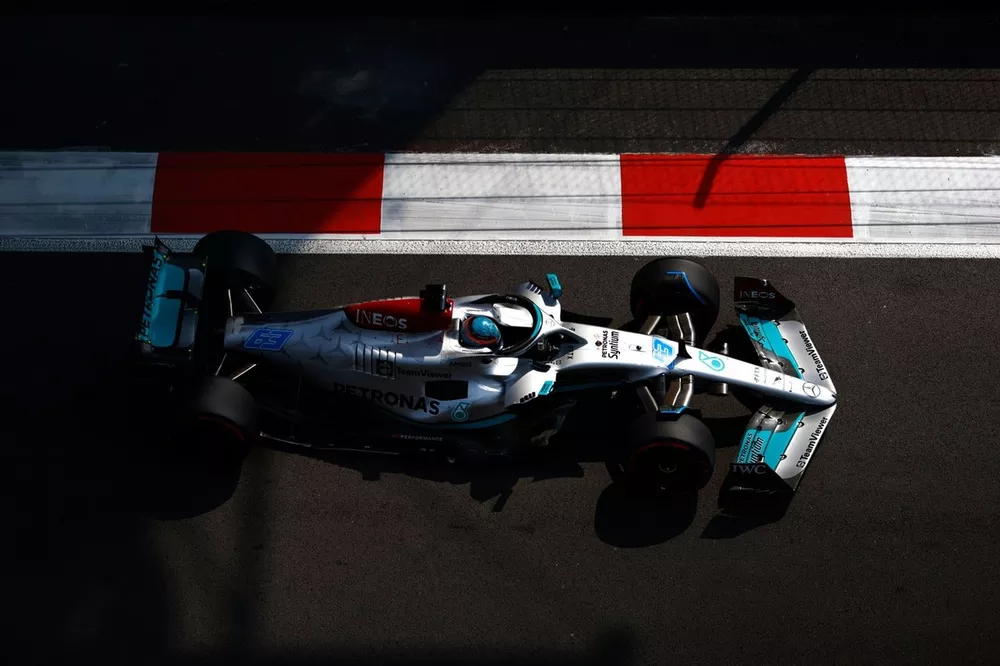
Whenever the rules change in Formula 1, the competitive order also faces disruption. Inevitably, one or two teams land nearer the right balance of compromises, or find clever solutions others have missed.
Given the scope of the changes coming next season, nerves are jangling up and down the grid: the combination of new engines and chassis has added to the level of difficulty.
In the previous decade, Mercedes' domination of F1 was so complete that the commercial rights holder regularly complained it was bad for box office. But when F1 shifted to a car package where underbody aerodynamics were responsible for generating the majority of the downforce, its first car for the new formula, though bold, was fundamentally flawed – and Mercedes never quite caught up with its rivals.
That's why so much effort has been put into making sure its 2026 car is competitive straight out of the box, even if that entailed sacrificing some development potential this season, according to trackside engineering director Andrew Shovlin.
Mercedes issues related to ride height
Photo by: Carl Bingham / Motorsport Images
"At the track we're completely focused on fighting for second in the constructors' championship, and we have been all along," said Shovlin. "As a team we've been disciplined in saying we can't push the resource back into this year in order to try and bring a late update to make our lives a bit easier. Because ultimately when you're starting with a new set of regulations, starting on the front foot is absolutely key.
"Where we've won championships that's what we've done. And if you look at the most recent regs in 2022, we started on the back foot and it's been difficult from there onwards, so we were never going to give in to temptation and put the previous car back in [the wind tunnel].
"But as I said, everyone at the track, the drivers, are all focused on delivering that. And if you look at Red Bull, they had a relatively recent update with a floor, but by and large the teams that we would expect to be fighting with have done similar, they've all put a lot of resource into next year."
Mercedes' first car for the new ground-effect era, the W13, was essentially a big bet on aerodynamics: the power unit and its cooling architecture were designed around running a minimal sidepod profile with a large floor area. But as Red Bull demonstrated throughout the life of this ruleset until comparatively recently, chassis dynamics are critical to the effectiveness of the underbody aero.
The floor has to run close to the ground to prevent air entering from the sides and disrupting the underbody flow field. What most teams have struggled with, especially Mercedes in the early phase, has been finding a ‘sweet spot' where the suspension is sufficiently compliant to ease stresses on the tyres, but also resistant to body movements which disrupted the floor's performance.
On the W13, lack of performance was a result of a combination of factors: a floor design only effective at very low ride heights, and suspension which was too stiff. Hence Mercedes was the worst affected by both porpoising and bouncing – and, having gone to the extent of unpicking its sidepod design, it came to realise that these were separate but related phenomena rather than synonyms for the same thing.
So problems caused by lack of understanding can compound through time as engineers are forced to change direction, often encountering new challenges along the way.
Mercedes won in Canada this year
Photo by: Sam Bagnall / Sutton Images via Getty Images
"To be honest, with the benefit of hindsight, it would have been very easy to get ourselves back into a winning position," said Shovlin.
"Particularly if we knew what we know now going into those regulations, understanding how to stop the cars bouncing, understanding where the big performance areas would be. That's all something that we learn over time, and Red Bull who started very competitively, they still needed to make all that learning.
"It's just that if you're at the front, it's easier to make measured decisions around where you put your development effort, whereas we were catching up, and there were a few occasions where we decided to change the concept of the car, change the design of the sidepods, and essentially what that does is it resets your development.
"You go backwards and you've got to hope that you find a steeper development path to recover it. But I think engineering in Formula 1 would be very easy if you were blessed with the benefit of hindsight."
Read Also:
Formula 1Mercedes sticks to 2026 F1 masterplan as George Russell and Kimi Antonelli confirmed
Formula 1Toto Wolff in talks to sell some Mercedes F1 shares, valuing team at $6bn
We want your opinion!
What would you like to see on Motorsport.com?
Take our 5 minute survey.
- The Motorsport.com Team
Read and post comments
Read also :
Share Or Save This Story
Copy link
Share on Viber
Previous article Why Pirelli's downforce simulations don’t tell the full story of F1’s 2026 pecking order
Next article F1 announces "Fortnite" partnership: Release date and how to get your favourite team's skin
Top Comments
There are no comments at the moment. Would you like to write one?
View More & Comment

More from
Stuart Codling
"Colapinto never hit the apex" – Audi's take on contentious Nico Hulkenberg penalty in Brazilian GP
Formula 1
Formula 1
Sao Paulo GP
5 d
"Colapinto never hit the apex" – Audi's take on contentious Nico Hulkenberg penalty in Brazilian GP
What the Brazilian GP revealed about F1's ability to cope with rain
Formula 1
Formula 1
Sao Paulo GP
5 d
What the Brazilian GP revealed about F1's ability to cope with rain

More from
Mercedes
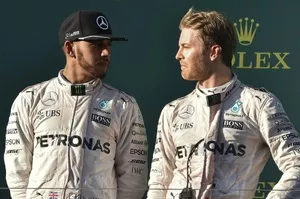
‘Lewis suspected a conspiracy’ – Nico Rosberg explains how Lewis Hamilton F1 rivalry went awry at Mercedes
Formula 1
Formula 1 1 d
‘Lewis suspected a conspiracy’ – Nico Rosberg explains how Lewis Hamilton F1 rivalry went awry at Mercedes
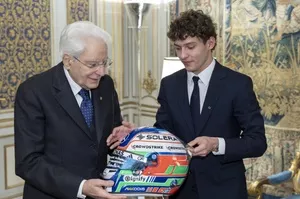
Kimi Antonelli meets Italian president Sergio Mattarella
Formula 1
Formula 1 2 d
Kimi Antonelli meets Italian president Sergio Mattarella
Latest news

World first McLaren-liveried Etihad aircraft takes to the skies after Norris victory
Sponsored
Sponsored 10 min
World first McLaren-liveried Etihad aircraft takes to the skies after Norris victory
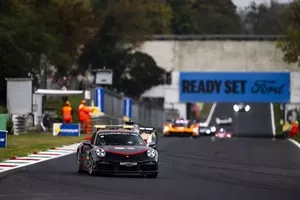
What the WEC can learn from the controversial Monza finish
WEC
WEC WEC
Monza
46 min
What the WEC can learn from the controversial Monza finish
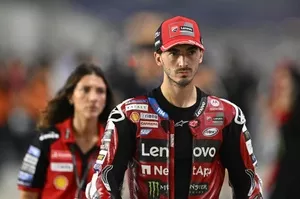
Francesco Bagnaia to miss Portuguese GP; Iker Lecuona to replace him
MotoGP
MGP MotoGP
Portuguese GP
1 h
Francesco Bagnaia to miss Portuguese GP; Iker Lecuona to replace him
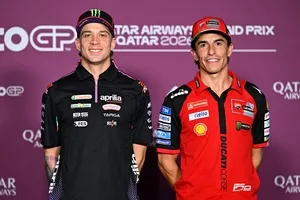
Andrea Dovizioso: Marco Bezzecchi and Aprilia threw away 2026 MotoGP title
MotoGP
MGP MotoGP
Qatar GP
2 h
Andrea Dovizioso: Marco Bezzecchi and Aprilia threw away 2026 MotoGP title
Feature
Discover prime content

Subscribe and access Motorsport.com with your ad-blocker.
From Formula 1 to MotoGP we report straight from the paddock because we love our sport, just like you. In order to keep delivering our expert journalism, our website uses advertising. Still, we want to give you the opportunity to enjoy an ad-free and tracker-free website and to continue using your adblocker.
You have 2 options:
- Become a subscriber.
- Disable your adblocker.
Subscribe now Already subscribed? Sign in here
Already disabled your adblocker?
Reload page
Manage Alerts
Subscribe