Commentary
Formula 1
Opinion: Why fewer rules would make F1 even worse
As much as Formula 1 is a battle of man and machine, it has from day one also been a fight about a rulebook.

Jonathan Noble
Edited: Jul 28, 2016, 1:45 PM
Copy link
Share on Viber





On the one side is the regulator, the FIA, which needs to impose a set of regulations to keep the teams and drivers under control, and ensure above all else that there is an equitable playing field.
But kicking back against that are the competitors, who are constantly trying to find ways around what has been written to seek personal advantage.
The constant movement of these battlelines is what has maintained much of the fascination of F1 over the years. Think of fan cars, double diffusers, traction control, F-ducts - all items introduced at the boundaries of rules.
While it is accepted that there will always be this fight between the poachers and the gamekeepers, equally there has to be some respect from both sides too.
It's why it's always been an urban legend in the paddock that Article 0.0.0 of the F1 Technical Regulations is 'Thou Shall Not take the Piss.'
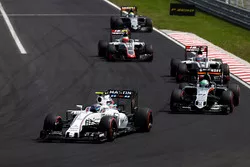
Recent weeks have, however, been dominated by talk that the rulebook has now gone too far. That endless complications over what is and isn't allowed over team radio, the farce surrounding the 107 percent teams in Hungary, plus the yellow flag row, has prompted fresh calls for F1's rulebook to be ripped up and the sport freed from such controversies.
Indeed, the matter is on the agenda for discussion in Geneva later on Thursday at a meeting of F1's Strategy Group.
Yet such a vision of a much smaller rulebook is a Utopian dream: for in a sport as complicated as F1, the less regulation there is, the greater the need becomes for interpretation. Then you end up in a world of arguing of what is a hole and what is a slot.
And at the end of the day, it's the many hours that stewards have had to spend interpreting rules that is the ultimate cause of the latest criticisms, not the actual rules themselves.
Take the yellow flag regulations, for example. The matter become such a controversy because the wording of the rules is actually open to interpretation
The FIA's International Sporting Code tells driver about double yellow flags: "Reduce your speed significantly, do not overtake, and be prepared to change direction or stop."
But what does any of that really mean?
What's 'significantly?' 1Mph? 5Mph? 50Mph? 100Mph. And what does 'be prepared to change direction or stop' mean? It doesn't mean you have to stop, for you can still drive flat out and be 'prepared' to stop.
So in the end, despite Lewis Hamilton's strong views, it was clear to see why the stewards came to the conclusion that Nico Rosberg had followed the wording of the rules.
Ultimately what is perhaps needed are some more stringent rules, that perhaps lay down a set percentage time loss for yellow flag zones to make the final decision on this matter black and white.
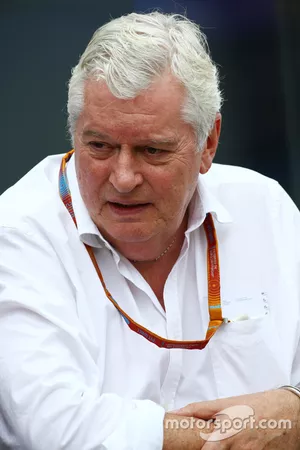
Or even, as Williams' Pat Symonds suggestion, you go even further: "If you really wanted to tighten that one up in qualifying for example, you could say that any laptime when double yellow flags are out is ignored, and then there would be absolutely no incentive to do a short lift. Some people would say it is unfair but it averages out over the course of the year."
What this yellow flag situation highlights is actually that it's not over-regulation that is the problem, but the exact opposite: the throwing up of grey areas in a fast-moving sport must always be closed down as quickly as possible. More control not less is better in this case.
It's not about unleashing teams and drivers to do what they want, but having a clear, all-encompassing rule structure that shuts down as much exploitation as possible, so there is not the need for stewards to get involved in the first place.
Let's not forget that rulebooks for sport, just like legal precedent in the wider world, expands because they have to try to constantly respond to unforeseen circumstances.
Just think about winning races in the pits by taking a penalty right at the end (like the 1998 British Grand Prix), or the on-off battle to ban and then allow team orders. Things happen and then a new rule is written to ensure they don't happen again.
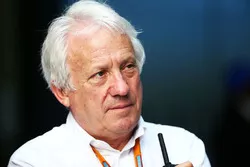
As Symonds said: "The rules do evolve. It is very easy to forget why they are put there. Some of us old boys have been sitting in these meetings for 40 years and we do remember – and Charlie [Whiting, F1 race director] remembers. And I tell you, the day when Charlie does go, it is going to be quite difficult because other people won't remember why the rules are there.
"What happens is that every now and then you get this situation which hasn't really arisen before and you find you have a conflict. So what we had in Hungary [with the 107 percent issue], we had a conflict.
"There are an awful lot of rules there, but they are all there for a purpose and sometimes you think there is a lot there, but they have been put there for a reason. Most of those are odd sorts of things that you see in there – way, way back there was a reason for doing them. And there are some really odd ones them."
Strip away many of these 'odd' rules and you will be left with a sport where stewards are constantly being challenged for interpretation of loose rules, and that would be terrible.
Symonds added: "You would just have a lot of arguing. If everything is written down and it is absolutely black and white and you have a decision that you can follow really easily, it should be simple - even if the rules themselves are complex. If there isn't much written down then there are a lot of arguments."
Perhaps key to it actually is not that there are too many rules, but the way that the regulations are taken to the fans. For it was particularly noteworthy that when Mercedes withdrew its appeal against Nico Rosberg's Silverstone penalty, it talked about the need to take up the issue of 'perceived' over-regulation.
If on the Saturday of Hungary, there had been an instant verdict on Rosberg, and a similarly quick decision on the 107 percent issue, then there would not have been the complaints about the rulebook. It's when fans have to wait three or four hours for a verdict that F1 lets itself down.
F1 is best when fans know exactly where the line between legality and cheating is drawn, and quick decisions are made by those in charge.
Just as a football match needs a referee for red cards and penalties, so too does F1 need someone to judge what is right and wrong. But that can only be done swiftly if there is a properly comprehensive rule book that shuts off the grey areas and the need for too much interpretation.
If you leave it too free and open, suddenly the poachers run amok and that's no good for anybody.
We want your opinion!
What would you like to see on Motorsport.com?
Take our 5 minute survey.
- The Motorsport.com Team
Read and post comments
Read also :
Share Or Save This Story
Copy link
Share on Viber
Previous article Preview: Why Hockenheim could set the tone for second half of the season
Next article Schumacher still close to everyone's hearts, says Massa
Top Comments
There are no comments at the moment. Would you like to write one?
View More & Comment

More from
Jonathan Noble

Brundle awarded OBE in King’s New Year’s honours
Formula 1
Formula 1 Dec 31, 2024
Brundle awarded OBE in King’s New Year’s honours
The new rules dilemma that will define the 2025 F1 season
Formula 1
Formula 1 Dec 31, 2024
The new rules dilemma that will define the 2025 F1 season
Verstappen issues Red Bull title warning in push for RB21 progress
Formula 1
Formula 1
Australian GP
Dec 28, 2024
Verstappen issues Red Bull title warning in push for RB21 progress
Latest news
Five drivers set for grid penalties for engine changes at F1 Las Vegas GP
Formula 1
F1 Formula 1
Las Vegas GP
12 min
Five drivers set for grid penalties for engine changes at F1 Las Vegas GP
Cadillac scraps V6 F1 engine, delays entry as PU manufacturer
Formula 1
F1 Formula 1
Las Vegas GP
1 h
Cadillac scraps V6 F1 engine, delays entry as PU manufacturer
LIVE: F1 Las Vegas GP updates - George Russell jumps to top of FP2 times at session end
Formula 1
F1 Formula 1
Las Vegas GP
1 h
LIVE: F1 Las Vegas GP updates - George Russell jumps to top of FP2 times at session end
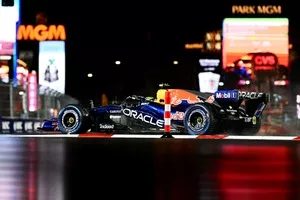
F1 Las Vegas GP: Rain ruins FP1 running
Formula 1
F1 Formula 1
Las Vegas GP
3 h
F1 Las Vegas GP: Rain ruins FP1 running
Feature
Discover prime content
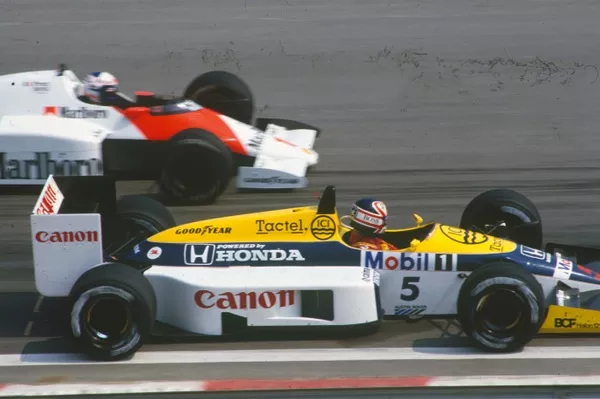
Top 10 F1 cars of the 1980s
Formula 1
By Kevin Turner
Top 10 F1 cars of the 1980s


Subscribe and access Motorsport.com with your ad-blocker.
From Formula 1 to MotoGP we report straight from the paddock because we love our sport, just like you. In order to keep delivering our expert journalism, our website uses advertising. Still, we want to give you the opportunity to enjoy an ad-free and tracker-free website and to continue using your adblocker.
You have 2 options:
- Become a subscriber.
- Disable your adblocker.
Subscribe now Already subscribed? Sign in here
Already disabled your adblocker?
Reload page
Manage Alerts
Subscribe