Feature
Formula 1 British GP
Analysis
How the F1 cost cap has put extra emphasis on the upgrade debate
F1’s cost cap has changed how teams think about spending rather than simply how much they spend – and it also magnifies a mistake if an upgrade fails to deliver on track
Jennifer Frisinger
Edited: Jul 5, 2026, 10:04 AM
Copy link

Share on Viber
Autosport Business
Covering industry news and insight into the business of motorsport
When Ferrari arrived in Austria with another round of updates, rival teams questioned how the Scuderia continues to introduce new parts at such a relentless pace. Toto Wolff described the programme as appearing "limitless", but did explain he expected it to slow down as the year progressed. Fernando Alonso joked that some teams must have a "money machine in the factory", while Carlos Sainz also admitted Williams is surprised by how frequently the frontrunners keep bringing upgrades.
The comments reflect more than competitive frustration, as it points to a growing debate over one of the central questions of Formula 1's cost-cap era: when is the best time to deploy a finite development budget?
There is no rule preventing a team from introducing a new floor every race weekend. Every upgrade, however, has to be paid for out of the same budget. Under a $215million cap, upgrades delivered now is budget that cannot be spent later in the season.
Frederic Vasseur saw this coming. Speaking before the season began, he argued that the timing of upgrades would increasingly be driven by financial constraints rather than technical capacity: "The driver of the introduction of upgrades will be the cost cap. If you have to send a floor to Japan or to China, you are burning half of your development budget."
Read Also:
The calendar itself has become part of that calculation this year. With Bahrain and Saudi Arabia removed from the schedule, the season has been reduced to 22 races instead of the original 24 (for now at least, with F1 aiming to reschedule at least one of the Middle East races). The cap remains unchanged even when races disappear from the calendar, meaning money that would have been spent on those race weekends stays in the budget. According to paddock estimates, that can amount to roughly $1m per team for each race that disappears.
The regulations dictate the budget, but not how teams choose to spend it, and Ferrari and Aston Martin have answered that question in opposite directions.
Ferrari has become the most visible example of a team willing to keep spending development budget throughout the season. Every new part has to be built and shipped to the track, and not every upgrade works as expected. When it does not, the money spent on it is gone.
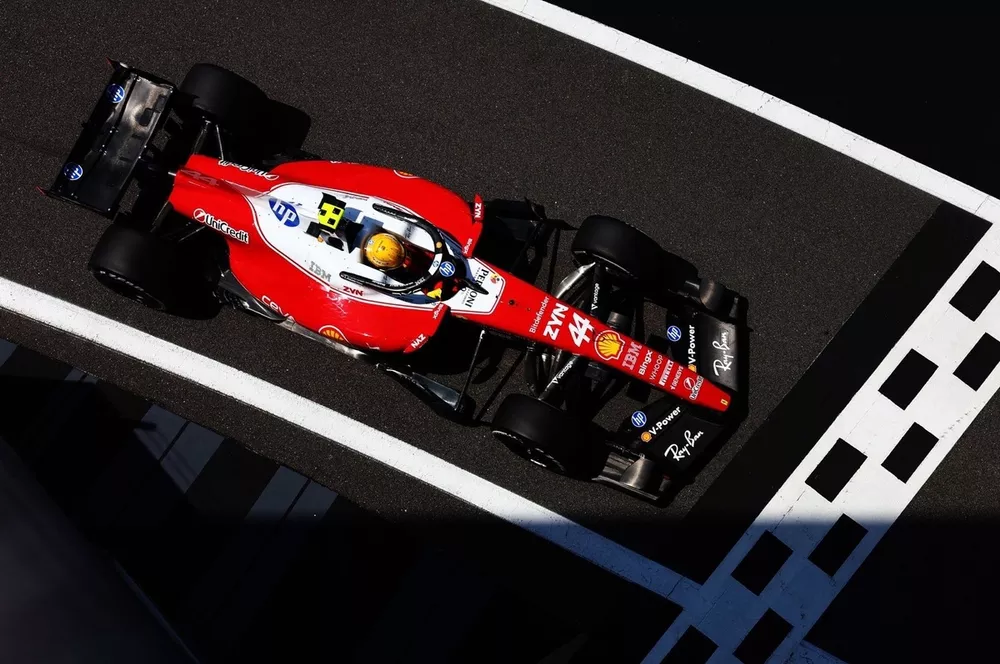
Ferrari's volume of upgrades has caught attention of its rivals
Photo by: Paul Foster
Ferrari's frequency, however, is partly born of necessity. The team brought 11 upgrades to Miami, more than any other team on the grid, and by its own admission committed a significant share of its season's budget to a package that produced very little lap time once engineers discovered the car was not behaving on track as their simulation tools predicted. Rather than slowing development after Miami, Ferrari continued introducing new parts, suggesting it believes a constant flow of upgrades remains the quickest route to improving performance.
Aston Martin has taken a different path. Adrian Newey has deliberately resisted the steady flow of updates, instead holding back for a major upgrade package confirmed for the Hungarian Grand Prix on 24-26 July, the race before the summer shutdown. Newey has called the choice a "painful decision," made deliberately rather than imposed by circumstance: while rivals brought updates race after race, Aston Martin held back for a single, larger step. It represents a different calculation: accept short-term pain in exchange for a potentially bigger reward later. If the package fails to deliver the expected gain, months of work and spending will have been committed to the wrong solution.
Both strategies are really betting on the same thing: the team's ability to know an upgrade will work before it ever reaches the track.
A team that can validate an upgrade before manufacturing avoids spending part of its budget learning the wrong lesson at the track
Ferrari and Aston Martin have chosen very different development paths, but both depend on confidence in their underlying data. Ferrari is betting it can identify, validate and deploy improvements quickly enough to justify a constant stream of new parts. Aston Martin is betting it can validate one large package well enough that it does not need that constant flow.
Using these specific teams as examples, context is also needed: Ferrari is in a title fight meaning every race counts, while Aston Martin is already shifting focus to the future after a disastrous start to the new regulations with power unit partner Honda, which has left it at the back of the pack.
F1’s cost cap means failed developments have sporting consequences
Before the cost cap, teams could often spend their way out of a mistake. If a new floor failed to deliver, another version could quickly follow. Today, every failed upgrade carries a financial consequence.
Aston Martin is holding off on upgrades until it delivers a large package in Hungary
Photo by: Alastair Staley / LAT Images via Getty Images
Aston Martin provides a useful example of why that confidence matters. Even as the team prepares its major upgrade package, Newey has been reluctant to predict the size of the gain. "We're predicting a large step, but I'm reluctant to put specific numbers out there because our simulation tools aren't yet as sophisticated or well correlated as they need to be," he said.
Read Also:
That is the constraint sitting behind every upgrade decision, because if a simulator predicts performance that never appears on track, the team has not only lost time but has also spent part of a fixed budget pursuing the wrong answer.
In other words, a team that can validate an upgrade before manufacturing avoids spending part of its budget learning the wrong lesson at the track.
The debate triggered by Ferrari's relentless stream of new parts has less to do with the Scuderia itself than with a broader change in F1 – putting political games to one side for the moment. Teams remain free to bring as many upgrades as they choose, what has changed is the cost of getting one wrong. In the cost-cap era, competitive advantage increasingly comes from avoiding expensive mistakes rather than simply finding extra performance.
Read Also:
The debate around the F1 cost cap isn't likely to go away any time soon
Photo by: Andy Hone/ LAT Images via Getty Images
We want to hear from you!
Let us know what you would like to see from us in the future.
Take our survey
- The Autosport.com Team
Read and post comments
Read also :
Previous article F1 to decide before summer break on recovering Middle Eastern race
Next article LIVE: F1 British GP commentary and updates - Leclerc wins British GP in controversial finish
Top Comments
There are no comments at the moment. Would you like to write one?
View More & Comment
More from Jennifer Frisinger
Three Circuits, Three Strategies: How promoters are pricing F1's sprint expansion
Formula 1
F1 Formula 1
Singapore GP
1 mo
Three Circuits, Three Strategies: How promoters are pricing F1's sprint expansion

How F1 learned to grow without growing
Formula 1
F1 Formula 1 3 mo
How F1 learned to grow without growing
Why F1 still owns only one grand prix
Formula 1
F1 Formula 1 3 mo
Why F1 still owns only one grand prix
Why everyone suddenly wants a piece of Alpine
Formula 1
F1 Formula 1 4 mo
Why everyone suddenly wants a piece of Alpine

What the Bahrain and Saudi cancellations reveal about how F1's money works
Formula 1
F1 Formula 1
Bahrain GP in Malaysia
7 mo
What the Bahrain and Saudi cancellations reveal about how F1's money works

How the cost of a slow start is felt financially in F1
Formula 1
F1 Formula 1
Japanese GP
7 mo
How the cost of a slow start is felt financially in F1

Why under the F1 cost cap regulatory mistakes carry compound interest
Formula 1
F1 Formula 1
Bahrain Pre-Season 2
9 mo
Why under the F1 cost cap regulatory mistakes carry compound interest
The Cadillac calculus F1 has made that weighs up $450m today vs billions tomorrow
Formula 1
F1 Formula 1 9 mo
The Cadillac calculus F1 has made that weighs up $450m today vs billions tomorrow
Latest news

Max Verstappen considering 2027 Daytona 24 Hours entry
Formula 1
F1 Formula 1
Las Vegas GP
4 h
Max Verstappen considering 2027 Daytona 24 Hours entry
F1 2027 grid: Who will be racing and where?
Formula 1
F1 Formula 1 5 h
F1 2027 grid: Who will be racing and where?

Autosport Business Awards open nominations to recognise excellence across global motorsport industry
Autosport Awards
AWD Autosport Awards 6 h
Autosport Business Awards open nominations to recognise excellence across global motorsport industry

Peugeot quits WEC, Citroen and Opel to wind down Formula E programmes
WEC
WEC WEC 7 h
Peugeot quits WEC, Citroen and Opel to wind down Formula E programmes
Subscribe and access Autosport.com with your ad-blocker.
From Formula 1 to MotoGP we report straight from the paddock because we love our sport, just like you. In order to keep delivering our expert journalism, our website uses advertising. Still, we want to give you the opportunity to enjoy an ad-free and tracker-free website and to continue using your adblocker.
You have 2 options:
- Become a subscriber.
- Disable your adblocker.
Subscribe now Already subscribed? Sign in here
Already disabled your adblocker?
Reload page
Manage Alerts
Subscribe