Feature
Formula 1 British GP
Opinion
How F1 teams prepare for the British GP at Silverstone
What are the main areas of focus in the run-up to the event and how are the circuit’s particular challenges addressed in a world of complex energy management and active aero? Our columnist has the answers

Pat Symonds
Published: Jul 3, 2026, 8:32 AM
Copy link

Share on Viber
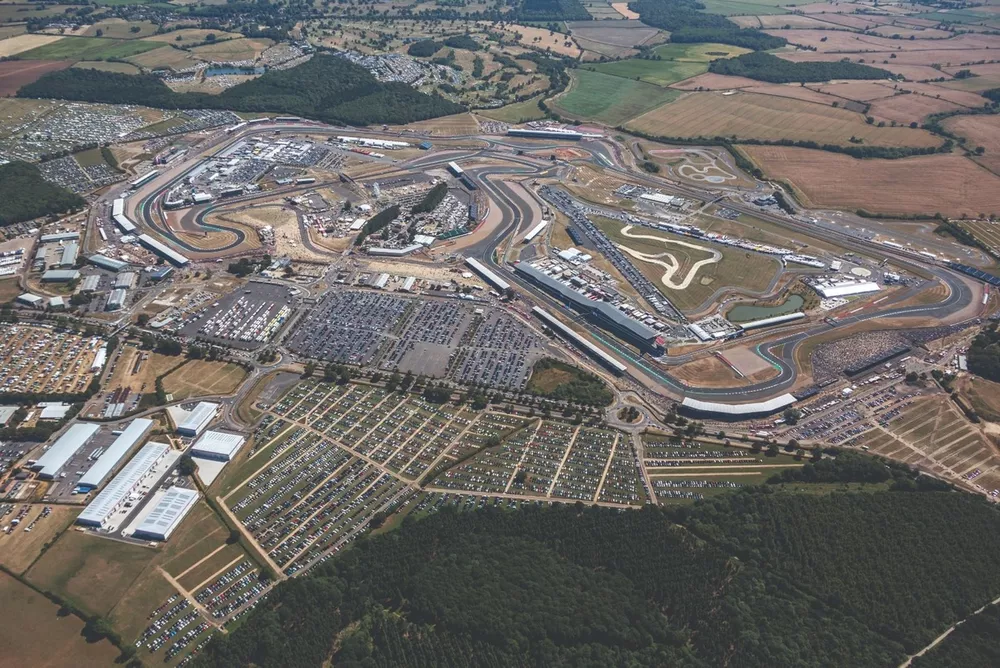
One question I am often asked is, how does a team prepare for a race? With Silverstone coming up I thought I would use this as an example of what the team does in the weeks leading up to the event, and how the new regulations for 2026 have changed the approach that is needed.
Many people talk about strategy as if it was the process around deciding when to make pitstops in a race and what tyres to use. In my book, strategy starts way before that. You may even argue that it starts at the point you design the car, but certainly it starts when you commence the planning for a race many weeks before the event itself.
This encompasses deciding on the basic configuration of the car, for example what bodywork is needed for cooling in the expected ambient conditions and what aerodynamic components are required. There will inevitably be upgrades, because it’s common practice now for small incremental improvements to be made each race since these marginal gains are necessary just to keep up with the opposition.
Of course, because Silverstone is a former airfield, you also need to anticipate the inevitable wind that we always experience there both in terms of magnitude and direction
As well as this, it is important to understand the characteristics of the circuit. If we take Silverstone in early July, we can expect average daily temperatures peaking at around 21C to 23C, but statistically there will be 11 rainy days with around 65mm of rain spread through these days.
So we need to be able to ensure we have cooling configurations capable of dealing with this. Of course, because Silverstone is a former airfield, you also need to anticipate the inevitable wind that we always experience there both in terms of magnitude and direction.
The next factor to consider is the performance sensitivities of the circuit. Silverstone is a fast track with some high-speed corners that stress the tyres. The front-left in particular becomes very heavily stressed and indeed we have seen failures of this tyre occur in the past.
The Northamptonshire venue’s fast corners put particular stress on the tyres
Photo by: Alastair Staley / LAT Images via Getty Images
The track has 18 corners and the lateral loads are particularly high in the fast corners – Abbey, Copse, Becketts and Stowe. This will inevitably require high tyre pressures and hard compounds.
In fact, the stresses on the tyres are so high that drivers often prefer the harder Pirellis since they are less prone to feeling the car ‘squirming’ on the tyres – something that can destroy the driver’s confidence in fast corners. The tyres will also run pretty hot at Silverstone, so the configuration of the brake cooling ducts needs consideration as these are also significant in controlling tyre temperatures.
With active aerodynamics, the approach to wing settings has changed somewhat. Prior to 2026, Silverstone had average sensitivity to downforce but very high sensitivity to drag, meaning that in the ranking of aerodynamic efficiency it placed sixth of the circuits we currently visit.
The stresses on the tyres are so high that drivers often prefer the harder Pirellis since they are less prone to feeling the car ‘squirming’ on the tyres – something that can destroy the driver’s confidence in fast corners
Now, the majority of the drag is shed with the active wings that open up on the straights, meaning that in the corners, where drag is less important, a bigger wing might be used than would have been selected in the past.
This of course is linked to the fact that it ranks high in the power stakes. An improvement of 10kW will lower lap times by 0.3 seconds. When regulating the extremely complex energy management rules that have been introduced this year, the FIA now ranks circuits by what it terms the power limited distance.
This means the proportion of the lap where the driver is demanding full power. In the case of Silverstone this distance is 3.833km (2.38 miles), or 65% of the total 5.891km (3.66 miles) lap distance.
Energy management rule tweaks introduced for the Miami GP were no cure-all
Photo by: Clive Mason / Getty Images
What this means is that it is a circuit where a lot of energy is required and, as the braking energy is quite low due to the relative lack of low-speed corners and scarcity of hard braking points, we can see that there are limited pure recharge opportunities.
This presents a challenge. Full electrical deployment is required at the start of each straight but exactly how to deploy the power becomes a strategic question that is effectively a zero-sum game. As the drivers have constantly complained about, deploying too much in one section will lead to a deficit of power elsewhere.
A significant amount of simulation is required to optimise the MGU-K deployment in the knowledge that a full lap of deployment is not possible, and the limited opportunities must be balanced for the greatest lap time benefit and racing ability.
With not much time for on-track optimisation, greater reliance than ever is placed on simulation and this in turn can lead to increased jeopardy
It becomes something of a chess game; you need to look several moves ahead. This is particularly so in qualifying when an out-lap needs to be driven in a particular way to best prepare the tyres for a qualifying lap, while at the same time ensuring that the battery is fully charged at the start of the timed lap. The changes made for Miami earlier in the year have helped this conundrum but not eliminated it.
All of this is further complicated this year at Silverstone because, for the first time since 2021, it is a sprint event. This means that free practice is limited to one hour on Friday before the competitive element comes into play. With not much time for on-track optimisation, greater reliance than ever is placed on simulation and this in turn can lead to increased jeopardy.
This is not necessarily a bad thing, because jeopardy is what makes sport the exciting action that fans love.
This article is one of many in the monthly Autosport magazine. For more premium content, take a look at the August 2026 issue and subscribe today.
It’s a British summer, so rain can rarely be discounted during the pre-race planning
Photo by: Zak Mauger / LAT Images via Getty Images
Read Also:
Formula 1Indecent proposal? How Sainz's big idea to change F1 qualifying might work
Formula 1Why Ferrari fears "deficit could be twice as big" to Mercedes at Silverstone and Spa
Formula 1How "charging station" Silverstone will really look different in F1 2026
We want to hear from you!
Let us know what you would like to see from us in the future.
Take our survey
- The Autosport.com Team
Read and post comments
Read also :
Previous article Indecent proposal? How Sainz's big idea to change F1 qualifying might work
Next article Why Russell believes energy-starved Silverstone will have better racing - like Australia and China
Top Comments
There are no comments at the moment. Would you like to write one?
View More & Comment
More from Pat Symonds
How F1’s rules got to be so complex
Formula 1
F1 Formula 1 21 d
How F1’s rules got to be so complex
How levelling the playing field isn’t antithetical to the principles of F1
Formula 1
F1 Formula 1 1 mo
How levelling the playing field isn’t antithetical to the principles of F1

Explaining the complicated art of F1 braking
Formula 1
F1 Formula 1 2 mo
Explaining the complicated art of F1 braking
What an engineer with four decades of F1 experience would choose as the ideal engine rules
Formula 1
F1 Formula 1 3 mo
What an engineer with four decades of F1 experience would choose as the ideal engine rules
Explaining the push and pull factors of Formula 1 suspension
Formula 1
F1 Formula 1 5 mo
Explaining the push and pull factors of Formula 1 suspension
How to simplify the complex subject of F1's electrical rules
Formula 1
F1 Formula 1
Monaco GP
5 mo
How to simplify the complex subject of F1's electrical rules

The big change for F1 2026 that has been largely ignored
Formula 1
F1 Formula 1 6 mo
The big change for F1 2026 that has been largely ignored
How the F1 2026 cars produced some nice surprises amid the noise
Formula 1
F1 Formula 1 8 mo
How the F1 2026 cars produced some nice surprises amid the noise
Latest news
The two debates at the heart of F1’s overtaking quandary
Formula 1
F1 Formula 1
Qatar GP
20 min
The two debates at the heart of F1’s overtaking quandary
How Roger Clark’s 1976 RAC Rally success answered the doubters
WRC
WRC WRC 31 min
How Roger Clark’s 1976 RAC Rally success answered the doubters
MotoGP Valencia GP: Marquez ends first day of final MotoGP weekend on top
MotoGP
MGP MotoGP
Valencia GP
45 min
MotoGP Valencia GP: Marquez ends first day of final MotoGP weekend on top
F1 Qatar GP: Antonelli leads Russell in opening practice
Formula 1
F1 Formula 1
Qatar GP
1 h
F1 Qatar GP: Antonelli leads Russell in opening practice
Subscribe and access Autosport.com with your ad-blocker.
From Formula 1 to MotoGP we report straight from the paddock because we love our sport, just like you. In order to keep delivering our expert journalism, our website uses advertising. Still, we want to give you the opportunity to enjoy an ad-free and tracker-free website and to continue using your adblocker.
You have 2 options:
- Become a subscriber.
- Disable your adblocker.
Subscribe now Already subscribed? Sign in here
Already disabled your adblocker?
Reload page
Manage Alerts
Subscribe