Analysis
Formula 1
How F1 has stopped "insane" engine spending war
Formula 1 has headed off the danger of an all-out arms race on engine development costs with a raft of new rules that will severely limit upgrades that power unit manufacturers can make already from this year.

Jonathan Noble
Edited: May 28, 2020, 1:23 PM
Copy link
Share on Viber
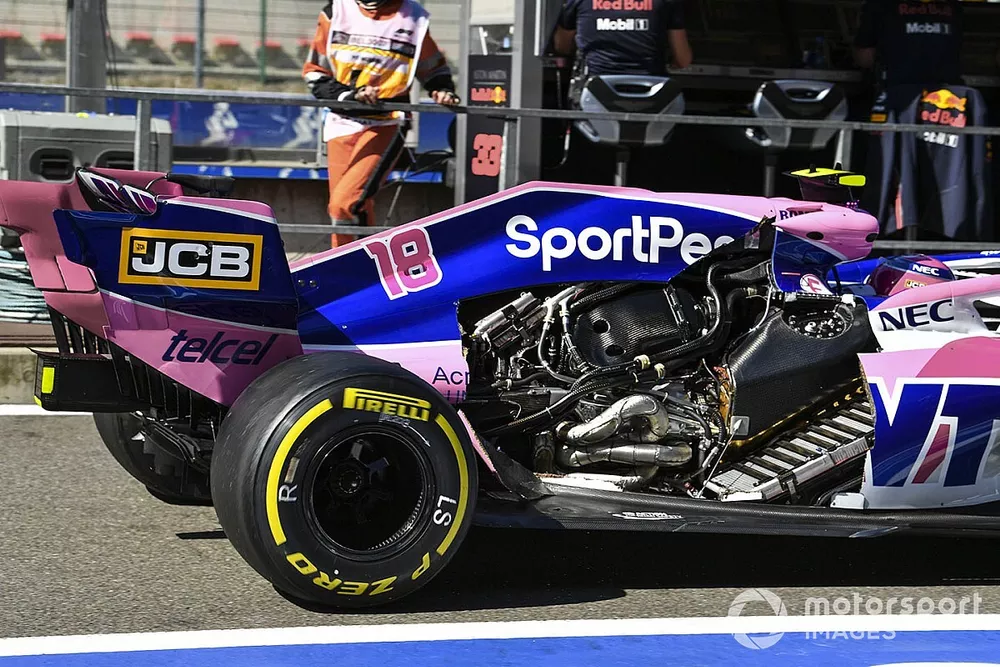
With engine development costs having been kept outside the scope of F1's budget cap that is coming into force from 2021, there had been concern that investment in that area of performance could ramp up.
In fact, Renault F1 team principal Cyril Abiteboul had already suggested earlier this week that the levels of expenditure now needed to stay competitive had become a burden.
"We've been able to push for containing the crazy development race on the engine, and it's really insane what we've been spending on the engine, and finally that's going to change," he said about the planned new rules.
One of the key components of the raft of rule changes that had been agreed for 2020 and beyond is a strict limit on what engine manufacturers can do.
Up until now, manufacturers have been able to come up with an all-new engine each year and then upgrade it as they wish each time a new element came into play on a grand prix weekend. So with three power units allowed per year it could mean multiple specs each season.
All that changes for next year, however, with F1's engine makers now having to homologate an engine for a period that runs from 2021 until the end of 2025.
The rules from 2021 state: "Each Power Unit Manufacturer shall be permitted to present only one homologation dossier with respect to the period and the homologation granted will be valid until the end of the 2025 Championship."
This does not mean that no modifications can be made during that period, but the regulations are clear that strict limits are being put in force throughout the five years covered.
Read Also:
- The floor tweaks aimed to slow down F1 cars in 2021
- How F1's new aero handicap system will work
- World Council approves lower cost cap and other F1 rule changes
Starting from this year already, the rules prevent manufacturers from changing some smaller components, while some items can be changed just once each year from now until 2023.
For example, all engine sub-assemblies (such an engine components within cam-covers, cylinder heads, crankcase and gear case) and the MGU-H cannot be changed again this year, while just one change will be allowed each year for the 2021 season, the 2022 season and then 2023.
Some items can be changed between now and the end of 2021, like the MGU-K and Energy Storage, with one further upgrade then allowed in 2022 or 2023.
Without going into specifics of the 41 engine items covered by the regulations, in broad terms it means only one upgrade in limited areas this year – such as the MGU-K, the energy storage of control electronics.
For 2021, manufacturers can have a new or upgraded engine for the start of the season, and then just one further change that year.
For 2022 and 2023, one further upgrade will be allowed, and then everything will be pretty much frozen until the current engine formula ends in 2025.
There are certain exceptions though, as existed when the V8 engines were frozen, to allow for changes to be made on reliability grounds.
The rules add: "A manufacturer may apply to the FIA during the course of the homologation period to carry out modifications to the homologated power unit elements for the sole purposes of reliability, safety, cost saving, car installation and supply issues.
"Applications must be made in writing to the FIA Technical Department and must provide all necessary supporting information. The FIA will circulate the correspondence to all manufacturers for comment."
One other interesting aspect is that the rules have got stricter in ensuring that customer teams are given the same specification of components as the works outfit from the start of 2021.
Unless a customer team has rejected a change, customer and works teams must run with "identical software for PU control and must be capable of being operated in precisely the same way….[and] run with identical specifications of engine oil and fuel, unless an alternative supplier is preferred by a customer team."
We want your opinion!
What would you like to see on Motorsport.com?
Take our 5 minute survey.
- The Motorsport.com Team
Read and post comments
Read also :
Share Or Save This Story
Copy link
Share on Viber
Previous article How F1's new aero handicap system will work
Next article How development freeze will save F1 teams money
Top Comments
There are no comments at the moment. Would you like to write one?
View More & Comment

More from
Jonathan Noble

Brundle awarded OBE in King’s New Year’s honours
Formula 1
Formula 1 Dec 31, 2024
Brundle awarded OBE in King’s New Year’s honours
The new rules dilemma that will define the 2025 F1 season
Formula 1
Formula 1 Dec 31, 2024
The new rules dilemma that will define the 2025 F1 season
Verstappen issues Red Bull title warning in push for RB21 progress
Formula 1
Formula 1
Australian GP
Dec 28, 2024
Verstappen issues Red Bull title warning in push for RB21 progress
Latest news

Sebastien Bourdais hopes latest WEC success will remind teams of his value
WEC
WEC WEC
Monza
14 min
Sebastien Bourdais hopes latest WEC success will remind teams of his value
"It's horribly painful" - Williams drops 2026 car upgrades to benefit 2027
Formula 1
F1 Formula 1
Sao Paulo GP
1 h
"It's horribly painful" - Williams drops 2026 car upgrades to benefit 2027

Iker Lecuona felt significant differences between Ducati's GP25 and GP26
MotoGP
MGP MotoGP
Qatar GP
2 h
Iker Lecuona felt significant differences between Ducati's GP25 and GP26
Feature
Discover prime content

Top 10 F1 cars of the 1970s
Formula 1
By Kevin Turner
Top 10 F1 cars of the 1970s


Subscribe and access Motorsport.com with your ad-blocker.
From Formula 1 to MotoGP we report straight from the paddock because we love our sport, just like you. In order to keep delivering our expert journalism, our website uses advertising. Still, we want to give you the opportunity to enjoy an ad-free and tracker-free website and to continue using your adblocker.
You have 2 options:
- Become a subscriber.
- Disable your adblocker.
Subscribe now Already subscribed? Sign in here
Already disabled your adblocker?
Reload page
Manage Alerts
Subscribe